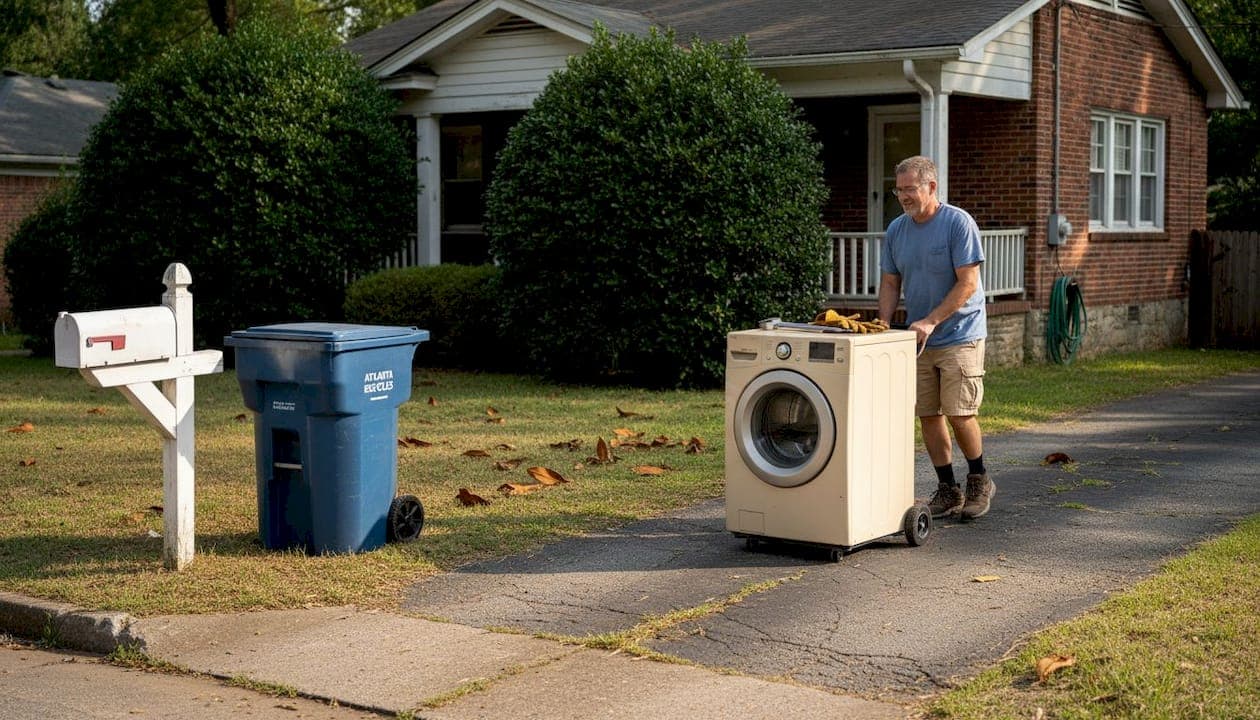
Getting rid of an old refrigerator, washer, or air conditioner sounds simple until you actually try to do it. Atlanta and Marietta residents face a maze of municipal rules, freon regulations, surprise fees, and pickup schedules that can stretch weeks out. Renters face an extra layer of confusion because lease terms and HOA rules sometimes override city programs entirely. Whether you're clearing out a kitchen after a renovation or finally ditching that broken dryer in the garage, this guide walks you through every legal disposal option, what to prepare, and how to avoid costly mistakes.
Table of Contents
- Understanding local appliance disposal rules
- Gathering what you need: Tools and requirements checklist
- Step-by-step: Curbside, drop-off, and professional options
- Avoiding common mistakes and legal pitfalls
- What most guides miss: The Atlanta vs. Marietta appliance dilemma
- Declutter fast: Same-day appliance removal made easy
- Frequently asked questions
Key Takeaways
| Point | Details |
|---|---|
| Local disposal rules matter | Atlanta and Marietta have distinct appliance disposal policies; know yours before acting. |
| Freon appliances require certification | Always have freon professionally removed and tagged to avoid fines and environmental hazards. |
| Renters need special strategies | Renters often cannot use city services and may benefit from private, same-day junk removal pros. |
| Combine pickups for cost savings | Bundling appliances or items can reduce fees and streamline removal whether using city or private services. |
| Eco-friendly recycling is an option | Working appliances can be recycled or donated to prioritize sustainability and compliance. |
Understanding local appliance disposal rules
Before you drag anything to the curb, you need to know what your city or county actually allows. Atlanta and Marietta operate under different systems, and mixing them up is one of the most common mistakes residents make.
A bulk item is generally any large household item that won't fit in a standard trash bin. A regulated appliance is any unit that contains refrigerants like freon, including refrigerators, freezers, window AC units, and dehumidifiers. These two categories carry very different rules.
In Atlanta, up to 12 free bulk pickups are available annually for single-family homeowners, and appliances qualify. The catch: freon appliances require a certification tag proving a licensed technician has already removed the refrigerant. Without that tag, the city will not take the unit. You schedule pickups through the Atlanta Department of Public Works, and timing can vary by neighborhood zone.
Marietta and the broader Cobb County area work differently. Cobb County drop-off at the GFL Transfer Station is available, but it is not free and not curbside. Fees apply, and certified freon removal is still required before drop-off. There is no routine curbside bulk pickup program like Atlanta's.
Here's a quick comparison:
| Feature | Atlanta | Marietta/Cobb County |
|---|---|---|
| Free curbside bulk pickup | Yes, up to 12/year | No |
| Freon certification required | Yes | Yes |
| Drop-off option | Limited | GFL Transfer Station |
| Fees | None for scheduled pickup | Minimum $14 drop-off fee |
| Scheduling method | City online portal | Self-transport to facility |
Key rules to remember before you start:
- Freon appliances need certified refrigerant removal before any disposal method
- Atlanta pickups are for single-family homes only; most renters do not qualify
- Cobb County drop-off requires you to transport the appliance yourself
- Appliance removal services handle certification logistics for you
- Illegal dumping carries fines that far exceed the cost of proper disposal
Legal warning: Improperly handling or venting freon is a federal violation under the Clean Air Act. Illegal dumping of appliances in Atlanta or Marietta can result in fines starting at several hundred dollars per incident. Always verify your disposal method is compliant before moving forward.
For more practical guidance, the junk removal tips on the Big Boys blog cover local nuances that city websites often leave out.
Gathering what you need: Tools and requirements checklist
With local rules clear, the next step is preparing everything you need for a smooth and safe disposal.
Moving a large appliance without the right tools is how people end up with back injuries, scratched floors, and broken doorframes. A 200-pound refrigerator does not move on willpower alone. Preparation matters as much as the disposal method itself.
Here's what you'll need before moving anything:
- Heavy-duty work gloves to protect hands from sharp edges
- Appliance dolly or hand truck rated for the weight of your unit
- Screwdrivers and adjustable wrench for removing doors or panels if needed
- Certification tag if disposing of a freon appliance through any method
- Lease or HOA approval if you are a renter or live in a managed community
- Vehicle or trailer access if using Marietta drop-off
- Confirmation of pickup scheduling if using Atlanta's curbside program
Pro Tip: Before scheduling a free recycling pickup or arranging a donation, plug the appliance in and confirm it actually works. Donation centers and recycling programs often reject non-functional units, which wastes your time and delays your cleanup.
The requirements vary depending on which disposal path you choose:
| Requirement | Atlanta curbside | Marietta drop-off | Professional removal |
|---|---|---|---|
| Freon certification tag | Required | Required | Handled by pro |
| Scheduling in advance | Yes, city portal | No | Same-day available |
| Transportation needed | No | Yes | No |
| Physical labor by you | Curb placement only | Full transport | None |
| Fees | None | Starting at $14 | Varies by load |
Renters face a unique challenge. Lease terms for curbside rules vary widely, and some landlords prohibit tenants from placing bulk items at the curb without prior written approval. If you're in an apartment or rental home, check your lease before scheduling anything.
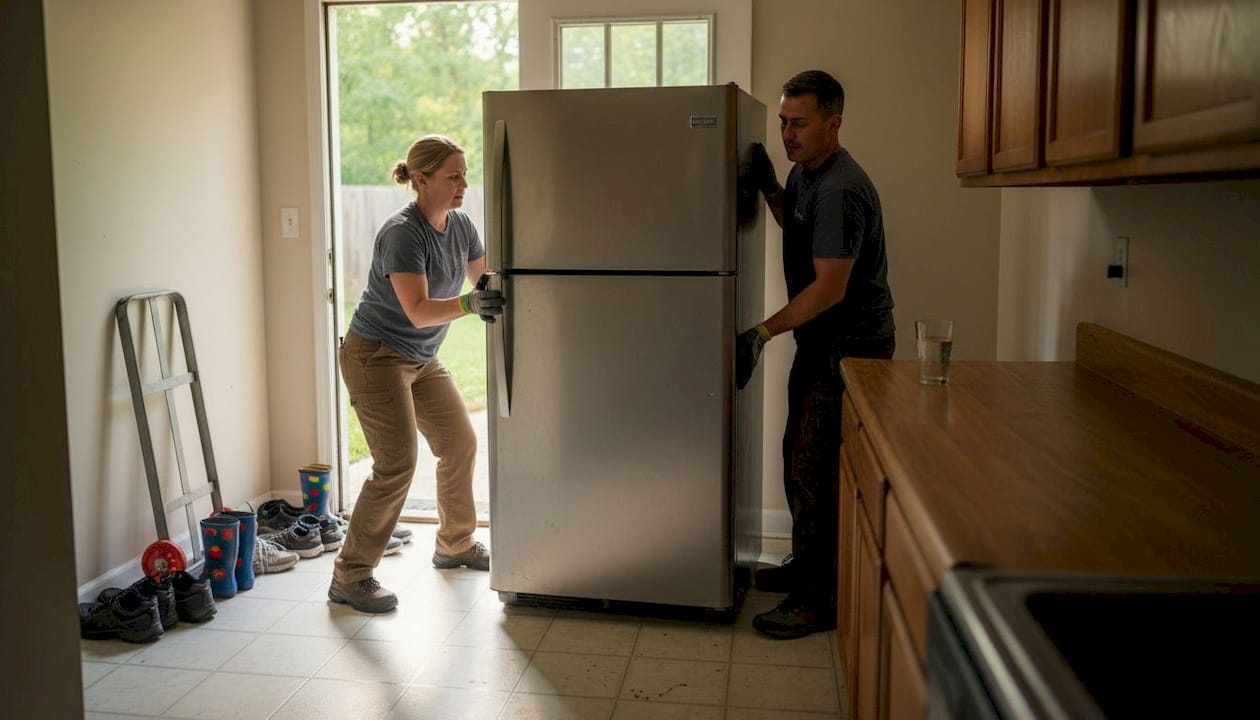
Heavy appliances also carry real injury risk. Refrigerators and washing machines can weigh between 150 and 300 pounds. Attempting to move them without a dolly or a second person significantly raises the chance of injury. Professional appliance pickup removes that risk entirely, especially for upper-floor units or tight hallways.
Also confirm your homeowner's or renter's insurance policy. Some policies do not cover injuries that occur during self-directed moves of heavy items.
Step-by-step: Curbside, drop-off, and professional options
Once you've gathered supplies, here's how to actually get that appliance out of your home using the right path.
Option 1: Atlanta curbside pickup
- Log in to the Atlanta Department of Public Works online portal
- Schedule your bulk pickup at least 48 hours in advance
- If the appliance contains freon, obtain a certification tag from a licensed technician first
- Place the appliance at the curb by 7 a.m. on your scheduled pickup day
- Do not block the sidewalk or street with the unit
Option 2: Marietta/Cobb County drop-off
- Contact a licensed HVAC technician to remove freon if applicable
- Obtain your certification tag and keep it with the unit
- Load the appliance into a truck or trailer
- Transport it to the GFL Transfer Station during operating hours
- Pay the applicable Cobb drop-off fee at the facility
Option 3: Hire a professional junk removal service
- Book online or call for a same-day appointment
- Get an upfront price quote before anyone shows up
- The crew handles all heavy lifting, freon certification coordination, and transport
- Confirm eco-friendly disposal or donation routing if the appliance still works
Here's how the three methods compare:
| Method | Cost | Speed | Convenience | Eco-friendly option |
|---|---|---|---|---|
| Atlanta curbside | Free | Slow (days to weeks) | Moderate | Limited |
| Marietta drop-off | $14+ | Same day if you transport | Low | Moderate |
| Professional removal | Varies | Same-day available | High | Yes |
Pro Tip: If you have multiple appliances to remove, combining them into one professional pickup saves significantly compared to scheduling multiple trips or multiple city pickups. Check junk removal pricing to estimate your total cost upfront.
For working appliances, donation is a legitimate and eco-friendly route. Habitat for Humanity ReStores, local shelters, and appliance recycling programs accept functional units. Municipal bulk pickup is free but slow, while private services cost more but move faster and handle more logistics. If you're also clearing out furniture, furniture removal can be bundled with appliance pickup for a single efficient visit.
Avoiding common mistakes and legal pitfalls
While disposal seems straightforward, mistakes can be costly. Let's address what not to do and how to finish with peace of mind.
Most common mistakes and how to avoid them:
- Skipping freon certification: Never assume a technician already drained the unit. Always get the tag in writing before any pickup or drop-off.
- Placing items curbside without scheduling: Atlanta requires a scheduled appointment. Items left without a confirmed pickup date may result in a code violation notice.
- Assuming renters qualify for city programs: Most Atlanta curbside programs apply to single-family homeowners. Renters in apartments often need to use private services instead.
- Dumping in vacant lots or dumpsters: Illegal dumping fines can exceed $500 per incident in Atlanta. It is never worth the risk.
- Ignoring HOA rules: Some communities have specific bulk item placement rules that override city guidelines. Always check both.
How to confirm your appliance was disposed of legally:
- Request a written receipt or confirmation number from any drop-off facility
- Keep your freon certification tag copy for your records
- For professional services, ask for a disposal confirmation or certificate
- Screenshot or print your Atlanta curbside scheduling confirmation
- For renters, keep written landlord or property manager approval on file
Important: Freon appliances require certified removal before disposal through any channel. Hazardous items are not accepted curbside in Atlanta or at the Cobb County transfer station without proper documentation. Violations can result in fines and environmental liability.
If you're unsure whether a specific item qualifies as hazardous or regulated, compare your options using resources like junk removal vs dumpster rental to understand what each service actually accepts. For large-scale cleanouts involving multiple appliances, cleanout services handle the legal compliance side so you don't have to track it yourself.
What most guides miss: The Atlanta vs. Marietta appliance dilemma
Most articles treat Atlanta and Marietta as interchangeable. They are not, and that assumption causes real problems for residents.
Atlanta's free bulk pickup program sounds generous, and it is, but only for single-family homeowners who schedule in advance and meet all freon requirements. Renters, condo owners, and anyone in a managed community often find they don't actually qualify. The program was designed for a specific type of property, and many people discover this after dragging a refrigerator to the curb.
Marietta's system is more honest in a way. It tells you upfront there are fees and that you're responsible for transport. But Cobb County's fee-based drop-off combined with the logistics of renting a truck and handling freon certification makes DIY disposal genuinely complicated. In those cases, paying for a private service often costs less in total time and stress than doing it yourself.
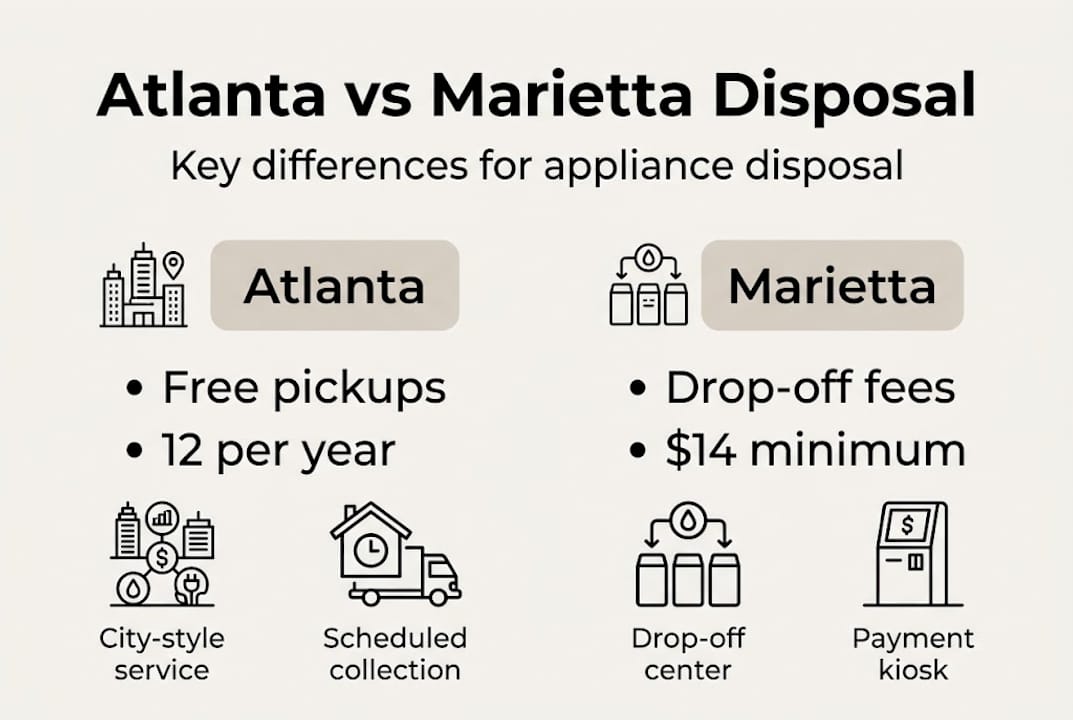
Atlanta offers up to 12 free pickups yearly, but Marietta's minimum $14 drop-off fees add up fast when you have multiple items. Local appliance removal pros know exactly which rules apply to your address, handle freon documentation, and often cost less than most people expect when you factor in the time saved.
Pro Tip: If you're unsure whether your address falls under Atlanta or Cobb County jurisdiction, call a local removal pro first. They can clarify your disposal options in minutes and prevent a wasted trip to the wrong facility.
Declutter fast: Same-day appliance removal made easy
Navigating freon certifications, city portals, and county drop-off fees takes real time and effort. For many Atlanta and Marietta residents, especially renters, the fastest and most legally sound path is booking a professional service that handles everything from heavy lifting to proper documentation.
Big Boys Junk Removal offers appliance removal with same-day availability, upfront pricing, and crews that are background-checked and insured. Whether you have one old washer or a full kitchen worth of outdated units, the process is simple: book online, get a real quote, and let the team handle the rest. For broader cleanouts, same-day junk removal covers everything in one visit. No city portals, no certification stress, no heavy lifting on your end.
Frequently asked questions
Can I leave appliances curbside for pickup in Atlanta?
Yes, single-family homeowners in Atlanta can schedule up to 12 free bulk pickups annually, and appliances qualify, but freon units must have a certified technician tag attached before pickup.
How do I dispose of a refrigerator with freon?
You must hire a licensed technician to remove the freon and provide a certification tag before disposal. Freon appliances without certified removal are rejected at curbside and drop-off facilities and can result in fines.
Is there a free appliance drop-off location in Marietta?
No. The GFL Transfer Station in Cobb County charges fees starting at $14, and Marietta does not offer routine free curbside bulk pickup like Atlanta does.
Who is responsible for appliance disposal: renter or landlord?
It depends on your lease. Renters should review their agreement carefully, as lease terms for curbside rules vary, and landlords are often responsible for large appliance removal unless the lease states otherwise.
Can appliances be recycled or donated instead of dumped?
Yes. Working appliances can be donated to organizations like Habitat for Humanity or recycled through certified programs. Free recycling is possible for working appliances and is a legal, eco-friendly alternative to municipal disposal.